




GEO is not automatic
Ranking on Google does not guarantee you appear in AI-generated answers. AI tools select sources based on authority, content structure, and how clearly your pages answer specific questions. Without deliberate optimization, you are invisible.

Messy content gets ignored
AI engines parse your website differently than humans do. Vague copy, poor structure, missing schema markup, and bloated code all reduce your chances of being cited. Clean, structured, authoritative content is what AI recommends.

The rules are already changing
AI search is not a future trend. ChatGPT now drives referral traffic to tens of thousands of websites. Google AI Overviews appear in roughly 1 in 5 searches. Every month you wait, competitors build authority you cannot recover quickly.
GEO optimization is built into everything we do.
We don’t treat GEO as an add-on. It shapes how we write copy, structure content, implement schema, and build every page of your website. The goal is a site that ranks on Google and gets cited by AI.

Website Architecture
Before any content work, we audit your site’s technical foundation. Page speed, crawlability, mobile performance, and clean HTML structure are the starting point. AI crawlers and Google both reward technically sound websites.

Authority-first Content
Through keyword research and AI query analysis, we identify the exact questions your customers ask both in Google and in AI tools. We build content that answers those questions directly, clearly, and with enough depth to be cited as a source.

Structured for AI Citation
Schema markup, FAQ sections, logical heading hierarchies, and clear entity signals tell AI engines what your business does and why it should be recommended. We implement these from day one, not as an afterthought.
THE COMPANY WE KEEP


“Since launching our new site with Parachute, our organic traffic increased by over 60% and we're now showing up in Google AI Overviews for our core services. We're getting calls from clients who found us through ChatGPT.”

There are four areas we focus on for GEO optimization.
AI engines won’t cite a slow, broken, or poorly structured website. Research by Seer Interactive found that brands cited in AI Overviews earn 35% more organic clicks than competitors on the same queries, while non-cited brands absorb the full traffic decline. This includes:
- Page speed and Core Web Vitals
- Crawlability and indexability
- Schema markup implementation
- robots.txt and XML sitemap configuration
- Clean, semantic HTML structure
- Mobile optimization
- SSL security and redirects
- LLMs.txt file creation for AI crawler access
Every page on your site needs to communicate clearly to both humans and AI. We optimize individual pages to maximize citation potential.
- Keyword and AI query research
- Answer-first content structure (direct responses to specific questions)
- Heading hierarchy aligned with how AI parses content
- FAQ sections with structured markup
- Meta titles, descriptions, and canonical tags
- Image alt text and contextual signals
- Internal linking strategy for authority distribution
AI tools cite sources they consider authoritative. According to BrightEdge, 80% of sources cited in AI Overviews don’t rank organically in traditional search results, meaning authority signals, not rankings, determine who gets cited. Building that authority takes a deliberate content strategy focused on the right topics, the right format, and consistent publication.
Content strategy for GEO includes targeting the specific prompts your customers use in ChatGPT and Perplexity, not just Google search queries. It means structured blog posts, service page expansions, and resource content that AI engines are more likely to reference.
For businesses serving Toronto and the surrounding areas, local GEO gives you an edge. AI tools use directory citations, Google Business Profile data, and locally focused content when generating location-based recommendations.
We optimize your Google Business Profile, build local directory citations, and create location-specific content that signals relevance to both Google and AI search engines in your market.

Web Design
Hand-crafted responsive website design that not only turns heads but consistently converts visitors into customers.

Web Development
Custom, open-source web development that is tailored to meet your specific marketing goals and functional needs.

SEO
Search engine optimization woven into every aspect of the website design and development process.

CRO
Design and implementation of conversion strategy to turn more visitors into qualified leads for your business.
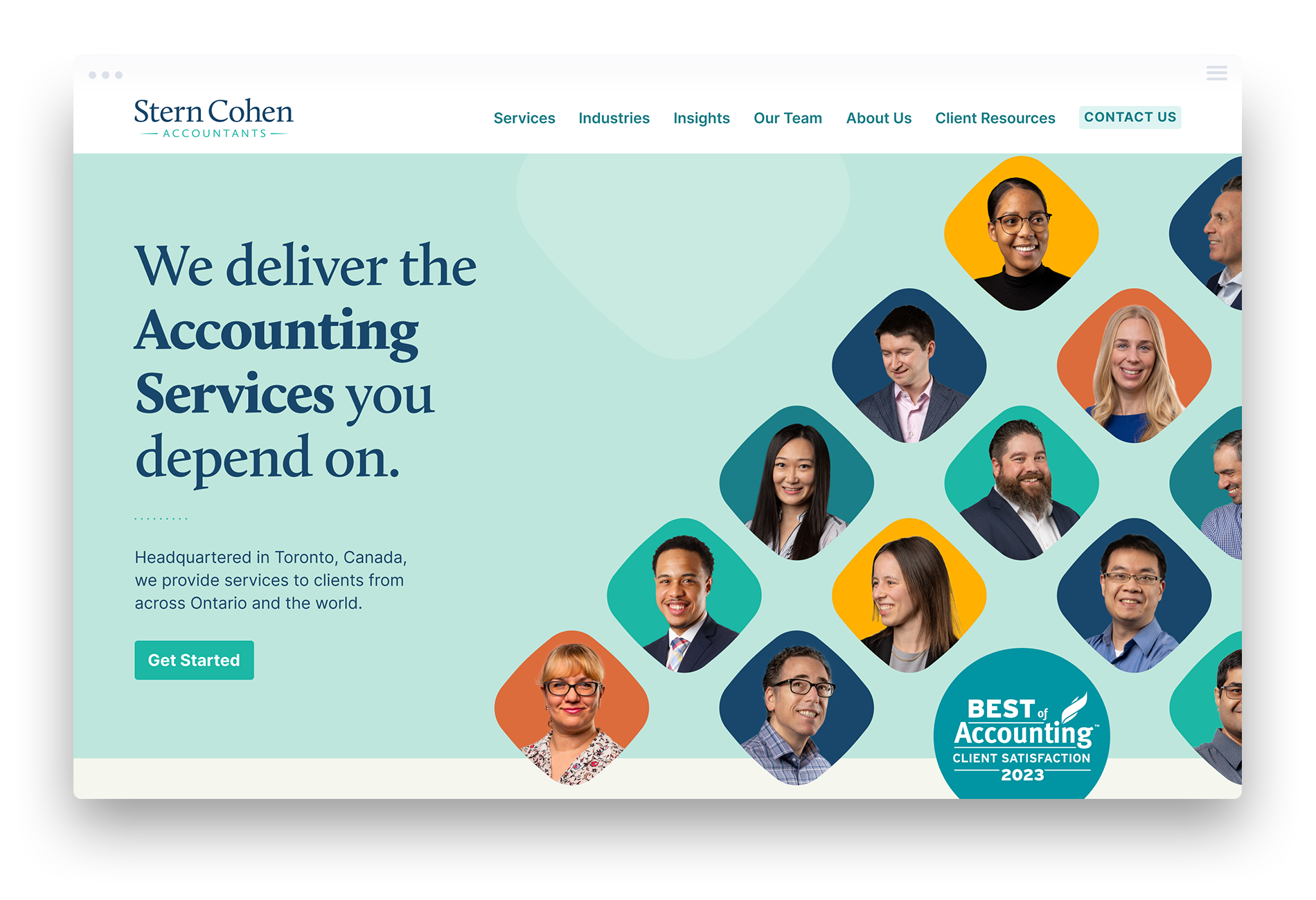
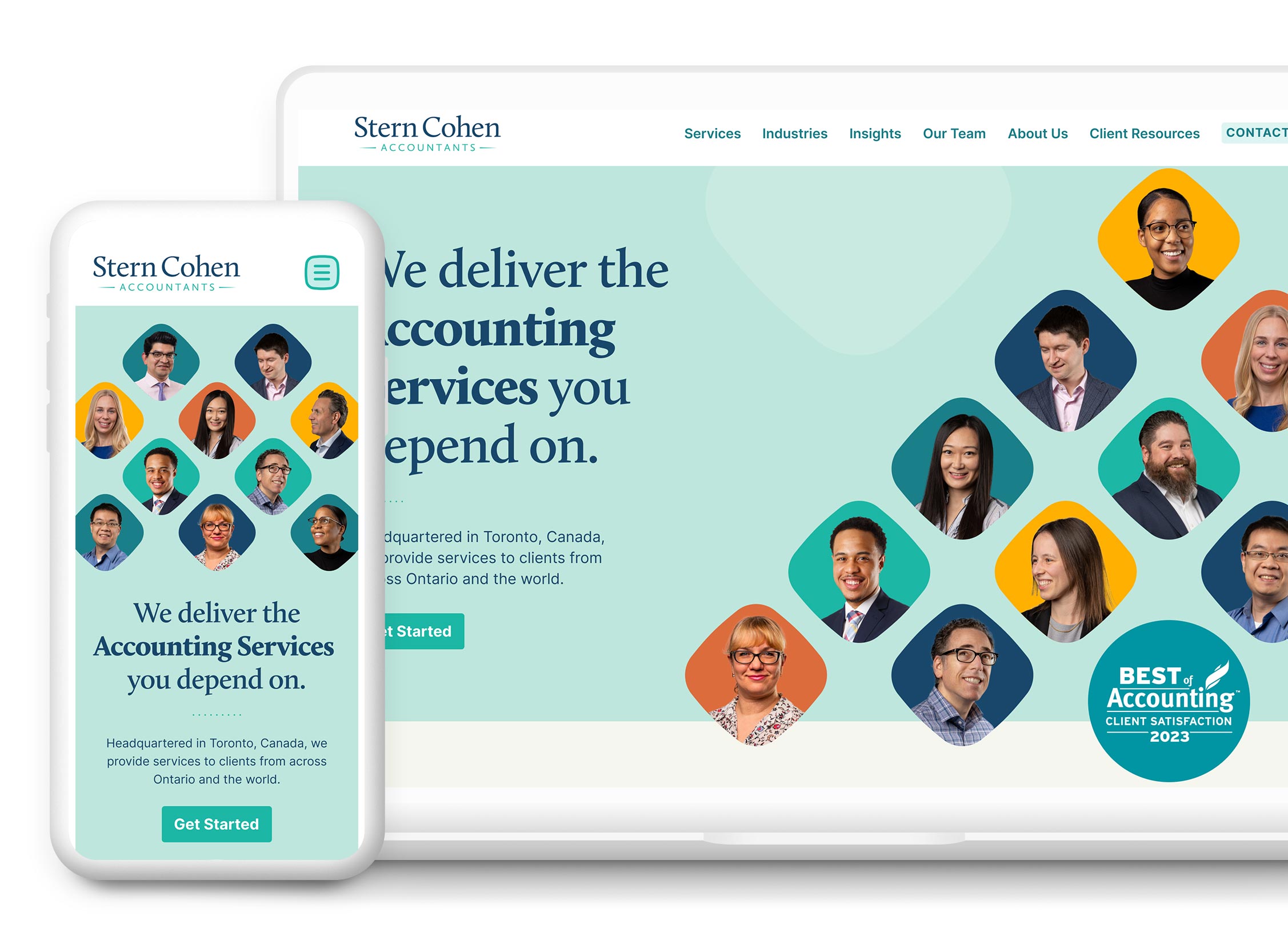
Stern Cohen LLP
Rebranding one of Toronto’s top accounting firms and future-proofing their digital marketing platform.
- Art Direction & Consulting
- Logo Design & Branding
- UX (User Experience) Design
- Responsive Website Design & Build
- Custom WordPress Development
- Secure Client Portal with File Repository
- Secure Tax Worksheet Repository
- Print Marketing Design
Generative engine optimization questions, answered.
We take pride in providing transparency to our clients and strive to maintain clarity in everything we do. If you’re not ready to contact us but have a question, you may find answers here.
More FAQsGEO is the practice of optimizing your website and content so that AI-powered search engines, including ChatGPT, Google AI Overviews, and Perplexity, cite your business as a source in their generated answers. Unlike traditional SEO, which focuses on ranking in a list of blue links, GEO focuses on being recommended by AI.
Learn more about GEO and how it works to increase your business’s visibility in our article Generative Engine Optimization: The Complete Guide to Ranking in AI-Powered Search.
ChatGPT and similar AI tools prioritize sources with strong authority signals: named expert authors, clear factual content, structured data markup, and citations from other reputable sources. A GEO strategy addresses all of these signals systematically.
Yes. SEO and GEO are complementary. Google still holds over 90% of the global search market share according to BrightEdge, and impressions across Google have increased 49% since AI Overviews launched — even as individual click-through rates decline. Both traditional SEO and GEO are needed.
GEO is a medium-term strategy. AI engines re-crawl and update their knowledge bases continuously, but building the authority signals that lead to AI citation typically takes 3–6 months of consistent effort.
AEO focuses on voice search and featured snippet optimization. GEO is broader — it encompasses all AI-generated responses including ChatGPT, Perplexity, Google AI Overviews, and Copilot. GEO includes AEO as a component.
Want your business to show up when customers ask AI for a recommendation?
GEO optimization takes technical precision and a long-term content strategy. Book a call with our team in Toronto to talk through where you stand and what it takes to get cited.
Book a Call